Every line of your electricity bill, accounted for.
Your bill has lines nobody checks: the demand charge, the contract-demand floor, power factor, Time-of-Day. We price every half-hour of every circuit against your own state tariff order, show which machine caused each charge, and check our findings against your next bill.
A CA checks your tax line by line. We do the same for your electricity bill.
Why does electricity cost more at some hours than others?Same unit.
Three prices.
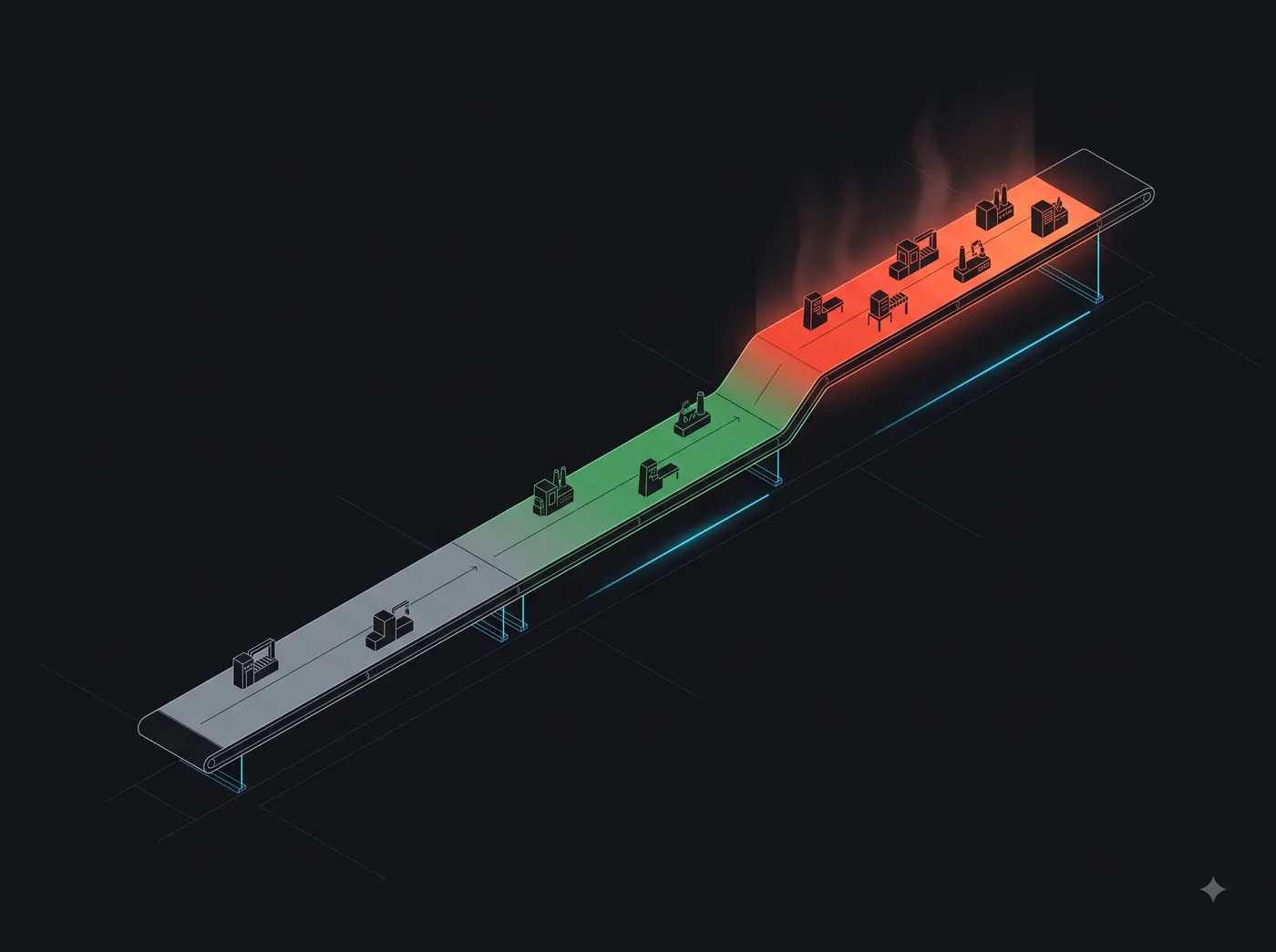
Daytime is the cheapest power you will ever buy. The evening is the dearest. Nobody on your floor is told which is which.
How do you know a claimed saving is real?Everyone promises savings.
We hand you the arithmetic.
Ask any energy vendor where their number came from. Then ask us.
Both figures illustrative. The difference is the line underneath.
Whose rules do you price against?Your tariff,
to the page.
Your state’s tariff order, held as versioned data. Every rupee we show cites the clause and the page it comes from.
Which machine set the charge?The machine
and the half-hour.
Circuit-level measurement, calibrated against a reference multifunction meter, names what set each demand, power-factor and Time-of-Day charge.
How do you know it was right?Checked against
your next bill.
Every finding is reconciled in writing against your next bill, misses included. The meter is how we measure; the tariff is what we’re expert in.
What happens to the bill if you move a load out of the evening?Move a machine.
Watch the money move.
Fifteen seconds with this, and you will never look at your bill the same way again.
How much does the evening peak cost a factory?A factory you can run
Five loads. Twenty-four hours. One bill at the end of the month.
What does this look like on a whole plant?Two case studies.
The label comes first.
We are new, so there are no customer results here yet. What there is: a simulated plant priced under two real tariffs, and a field log from our calibration run. Each says exactly what kind of evidence it is before it shows a number.
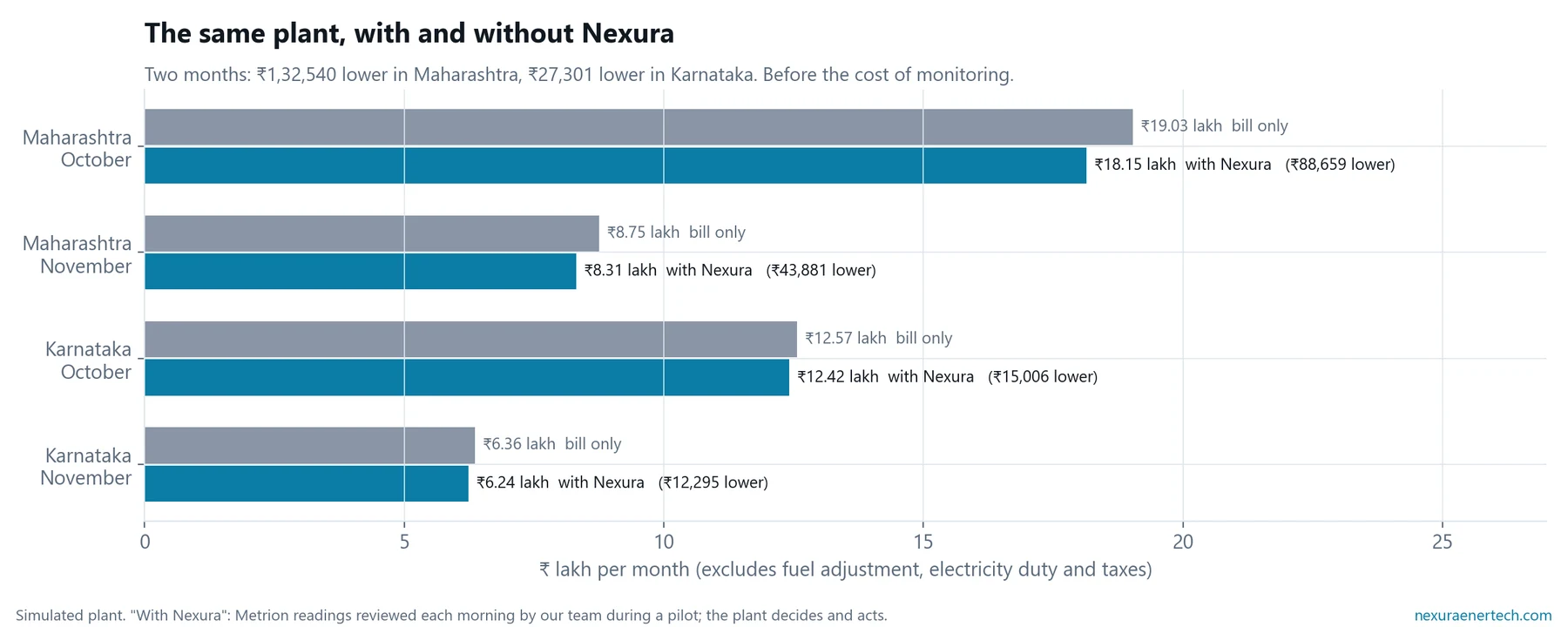
One plant, two tariffs: what changes when you can see inside the panel
Same factory, same problems, priced under Maharashtra’s and Karnataka’s 2026-27 tariffs. Finding each problem the next morning instead of from the bill: ₹1,32,540 lower over two months in Maharashtra, ₹27,301 in Karnataka.
Read the case study →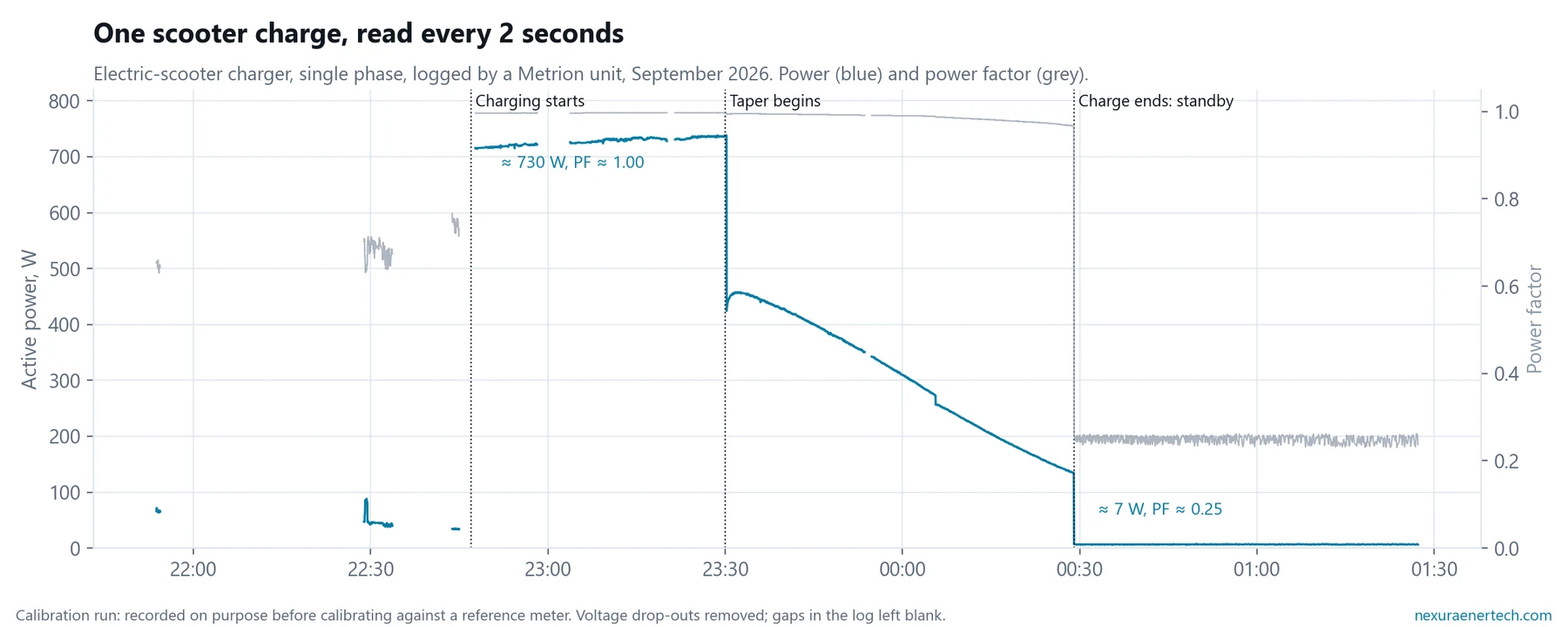
What one electric-scooter charge looks like, read every two seconds
Power factor 0.986 while charging, 0.25 idling for the hour it stayed plugged in. Detail a 30-minute meter block and a monthly bill cannot carry.
Read the field log →Where is Metrion installed?Your panel already knows.
Nobody ever asked it.
A facility running hot. Our device on the panel. Every reading taken at the source — then turned into a costed plan.
Does installation need a shutdown?Nothing cut.
Nothing stops.
Clamps close around your existing wires. The unit sits on the DIN rail beside your breakers. One afternoon, no shutdown.
What does the unit read on each phase?Small enough to forget.
Accurate enough to argue with. Metering-grade measurement on every phase — built to be checked, not trusted.
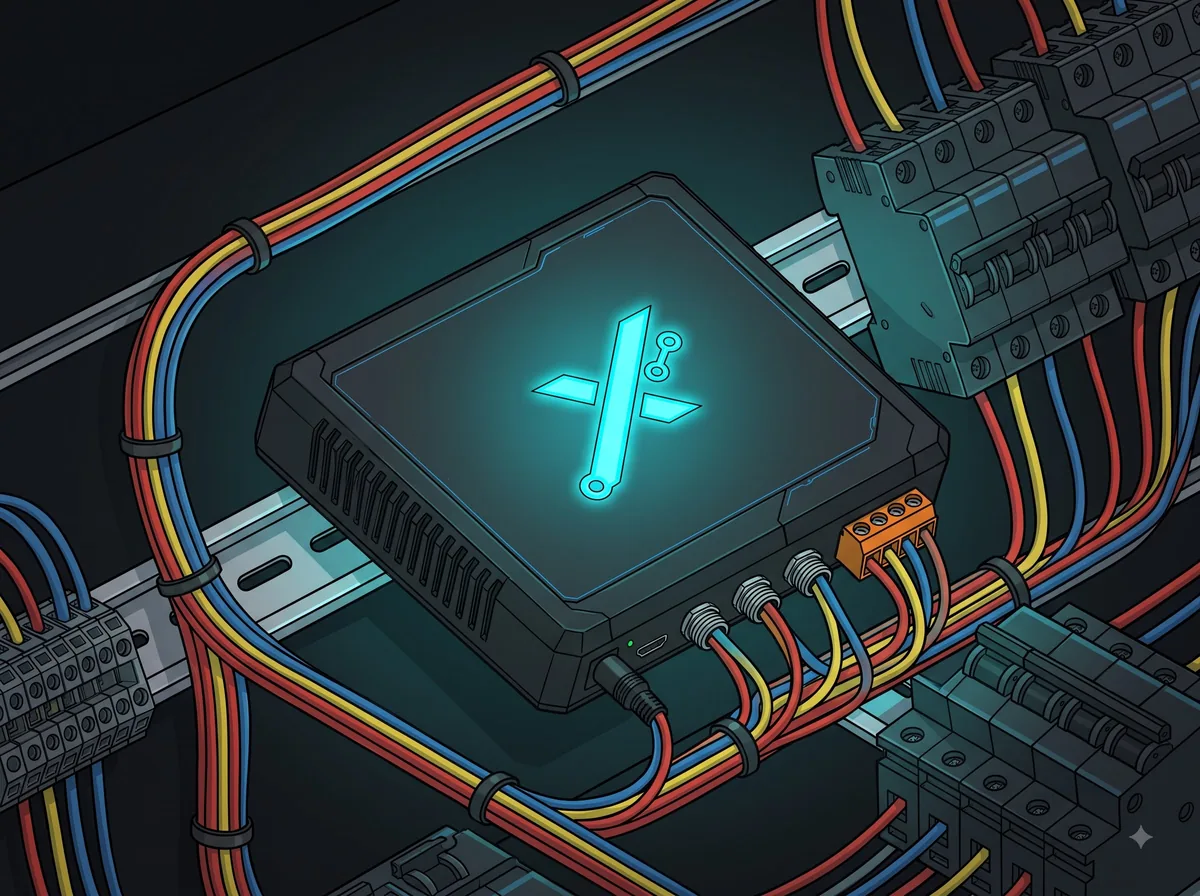
- Dedicated metering front endFour current channels, three voltage — voltage, current and power factor measured per phase, at the source, not inferred from a monthly bill.
- On-board controllerReads every two seconds, aggregates to one-minute records, and holds two days of readings if the network drops.
- Three-phase, four-wireL1, L2, L3 and neutral, on a screw terminal.
- Three isolated current-sensor inputsSplit-core clamps close around your existing conductors. Nothing is cut.
- One indicatorPowered, measuring and reporting — or it tells you which one it isn’t.
Who runs Nexura EnerTech?Two engineers.
One question.
Where is the money actually going? We’re looking for our first sites — this is who you’d be dealing with.



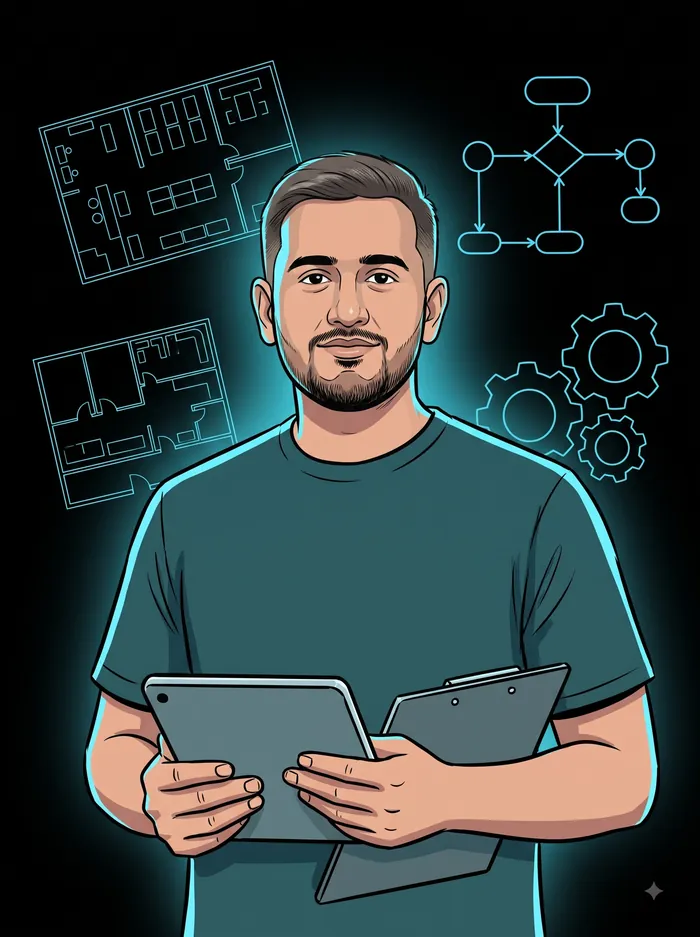
Hover a card for the line-up →
What does the free bill analysis include?Ten factories.
No cost.
We launched this September and have not shipped to a paying customer yet — you would be among the first ten. No cost, no obligation, and no sales call unless you ask for one.
You’ll be talking to me.Irfan Sheikh, founder. Not a sales team.